Colorado Restoration Group is a statewide referral and dispatch network connecting homeowners with local, vetted water damage restoration crews. From dense Front Range neighborhoods to small mountain and plains towns, we match you with a crew that actually serves your zip code.
Water damage restoration Colorado homeowners need begins with understanding how quickly water affects a home. Within the first hours, moisture soaks into drywall, subflooring, and insulation. Structural saturation follows, and mold growth can begin within roughly 24 to 48 hours in the right conditions. How quickly a restoration crew reaches the property directly influences how much of the home can be saved.
Colorado Restoration Group exists to shorten that gap. Rather than searching for a restoration company one by one, homeowners call one number and get connected to a local, vetted crew that actually covers their specific zip code. Because Colorado is geographically vast and unevenly served, this network model matters — a homeowner in a Front Range suburb and a homeowner in a rural plains town both need a crew that can genuinely reach them.
This page covers what water damage restoration involves, the six core services the network provides, the four regions of Colorado the network serves, and how the referral process works from your first call to the direct connection with a local crew.
Colorado Restoration Group is a Colorado-focused referral and dispatch network. The concept behind it is straightforward: homeowners across a large, spread-out state need a reliable way to find local restoration crews who are available and who genuinely service their area. Instead of leaving that to chance, the network maintains coverage across 360 zip codes and 228 towns and cities, so a homeowner's request is matched to a crew that can actually reach them.
The value of this model is clearest in the contrast between metro and rural Colorado. In dense Front Range neighborhoods, homeowners have many options but still benefit from a quick, vetted match. In small mountain and plains towns, local providers are fewer, and finding an available crew on your own is harder. The network helps in both cases by connecting each homeowner to a crew that covers their zip code.
Every claim on this site is limited to what is structurally true about a referral network. We do not claim to personally dispatch our own technicians or own restoration equipment — we connect you with local crews who do the work.
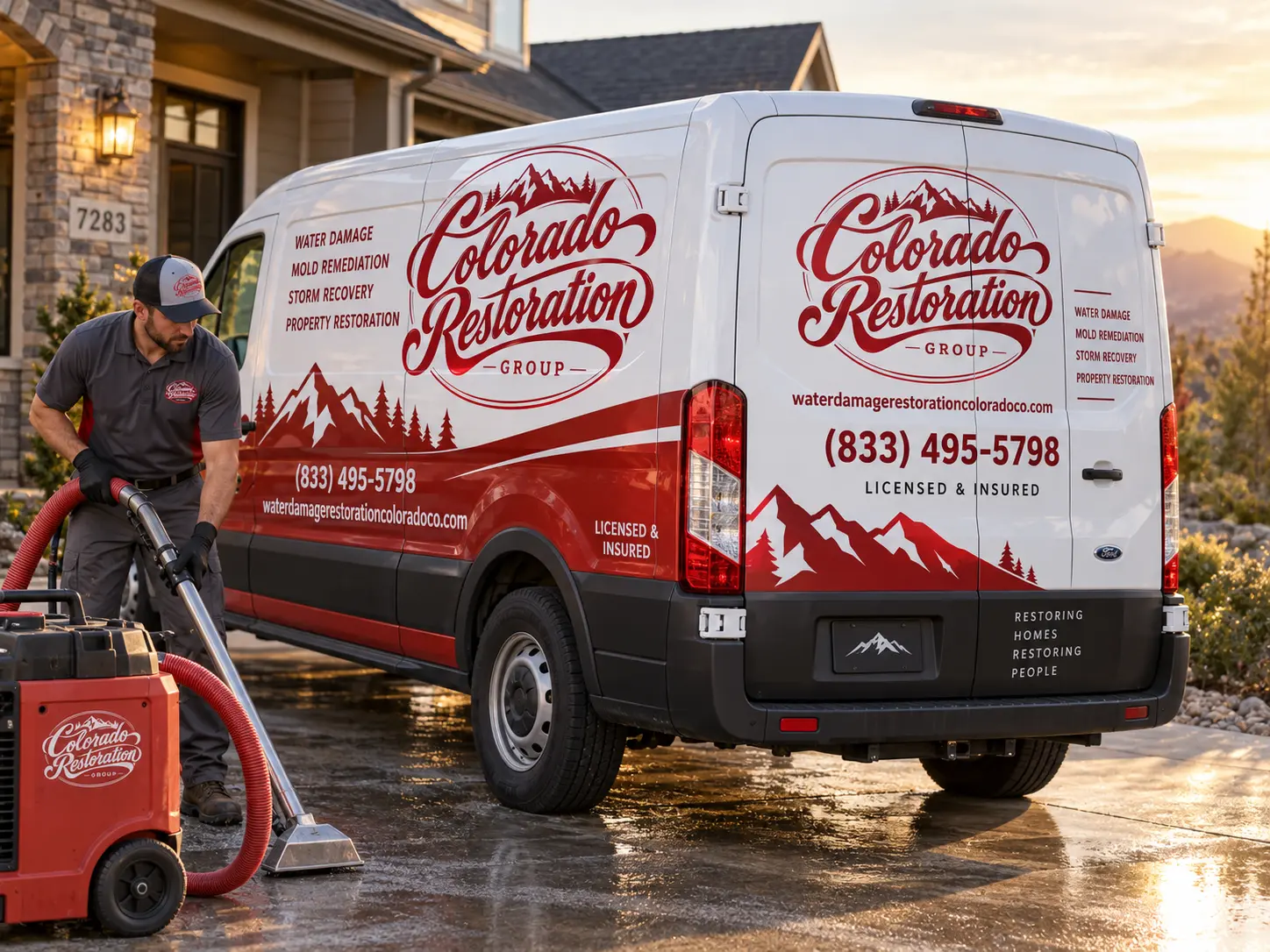
Each service below has its own dedicated page with deeper detail. Here is a quick overview of what each one addresses and when a Colorado homeowner might need it.
The pillar service covering the full restoration process — assessment, extraction, drying, and repair. A finished basement in a Denver bungalow that flooded after a spring storm is a classic scenario.
Learn more →Standing water removal using pumps and extraction units. When a sump pump fails in a Colorado Springs crawl space, extraction is the first step before anything can dry.
Learn more →Cleanup after external water intrusion — snowmelt runoff, flash flooding, or creek overflow. A Boulder home near a drainage channel after heavy mountain rain is a realistic case.
Learn more →Drying hidden moisture in walls and subfloors using air movers and dehumidifiers. This step is essential after extraction to prevent mold in a Fort Collins home.
Learn more →Handling contaminated black water from sewer or septic backups. An older home in Pueblo with aging sewer laterals is a common scenario for this service.
Learn more →Repair after basement flooding from foundation intrusion, window well leaks, or sump pump failure. Finished basements in Aurora are especially vulnerable.
Learn more →The network spans four distinct regions of Colorado, each with its own housing stock, climate, and water damage risks.
Dense older housing stock, many finished basements, and urban stormwater drainage patterns make this the highest-volume region for water damage restoration.
Vail, Breckenridge, Aspen-area towns, Estes Park, and more. Snowmelt runoff, seasonal occupancy homes, and higher-elevation freeze/thaw cycles raise the risk of pipe bursts and spring flooding.
Grand Junction, Fruita, Palisade, and surrounding communities. A different climate and precipitation pattern, plus irrigation-adjacent flood risk, shape the water damage profile here.
Smaller towns spread across the plains. Longer distances between service providers are exactly why the network model helps these communities — a local crew that covers your zip may be harder to find on your own.
See the full list of 360 zip codes across all four regions on our Areas We Cover page.
Call (720) 918-0049 or submit a request with your service address and zip code.
The network reviews the details of your situation to understand the scope of the water damage.
Your request is matched to a vetted restoration crew that actually services your specific zip code.
You're connected directly with the crew to arrange the restoration work. The network does not perform the physical work itself.
Water damage progresses on a timeline, and the sooner restoration begins, the better the outcome. In the first hours, moisture wicks into drywall, insulation, and subflooring. Within roughly 24 to 48 hours, mold growth can begin in damp conditions. Structural materials like wood framing and drywall begin to degrade the longer they stay saturated.
This is why the speed of a response matters — not as a promise of a specific arrival time, but because the window for saving materials is real. Extraction removes standing water, and structural drying pulls hidden moisture out of walls and subfloors before mold takes hold. The faster a local crew can begin these steps, the more of the home can typically be preserved.
These are general, factual industry timelines about how water damage behaves. They are not a guarantee of a specific response time from any individual crew.
From the Front Range to the Western Slope and the Eastern Plains, Colorado Restoration Group connects homeowners with local restoration crews serving their zip code.
Call (720) 918-0049